Explore Transceivers & Cabling Subcategories
Transceivers & Cabling
%20Optical%20Transceiver.webp&w=1920&q=75)
%20Optical%20Transceiver.webp&w=1920&q=75)
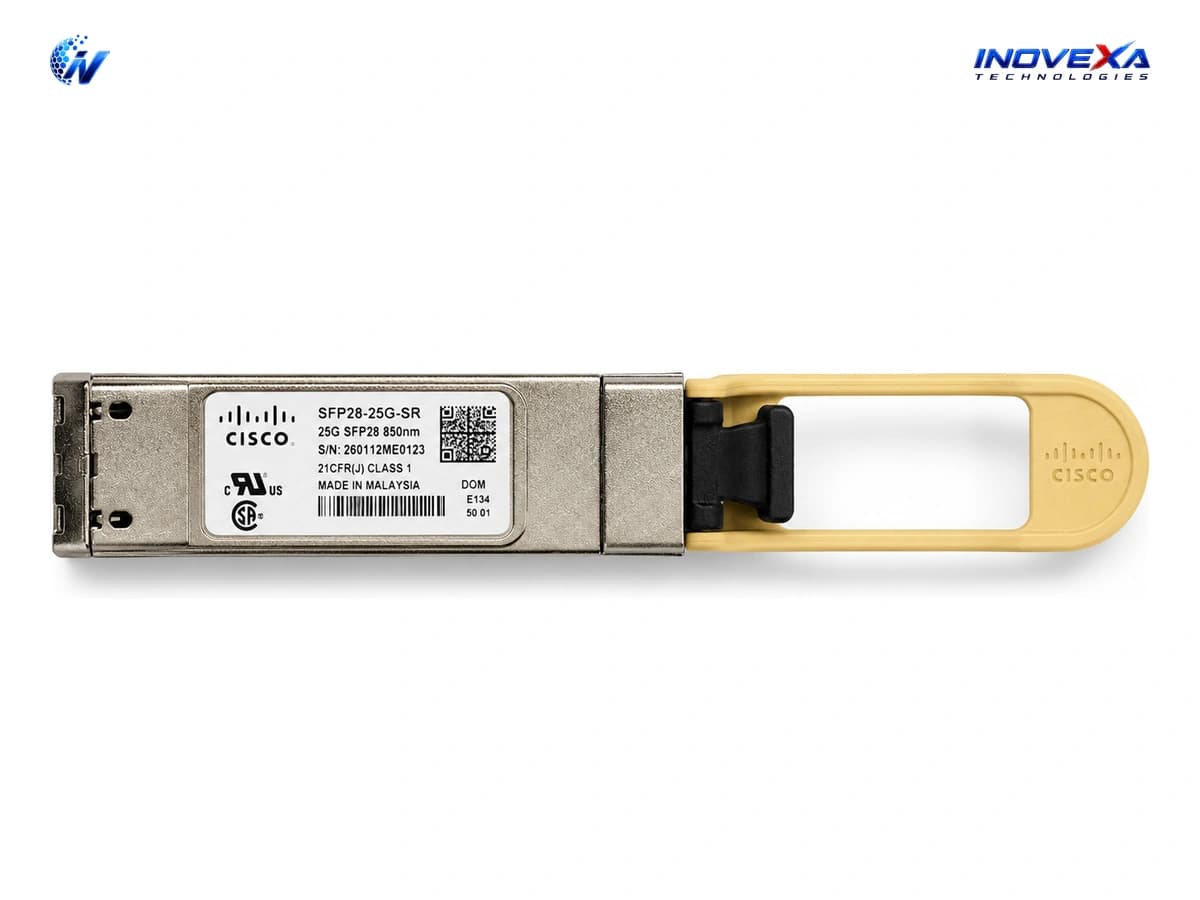
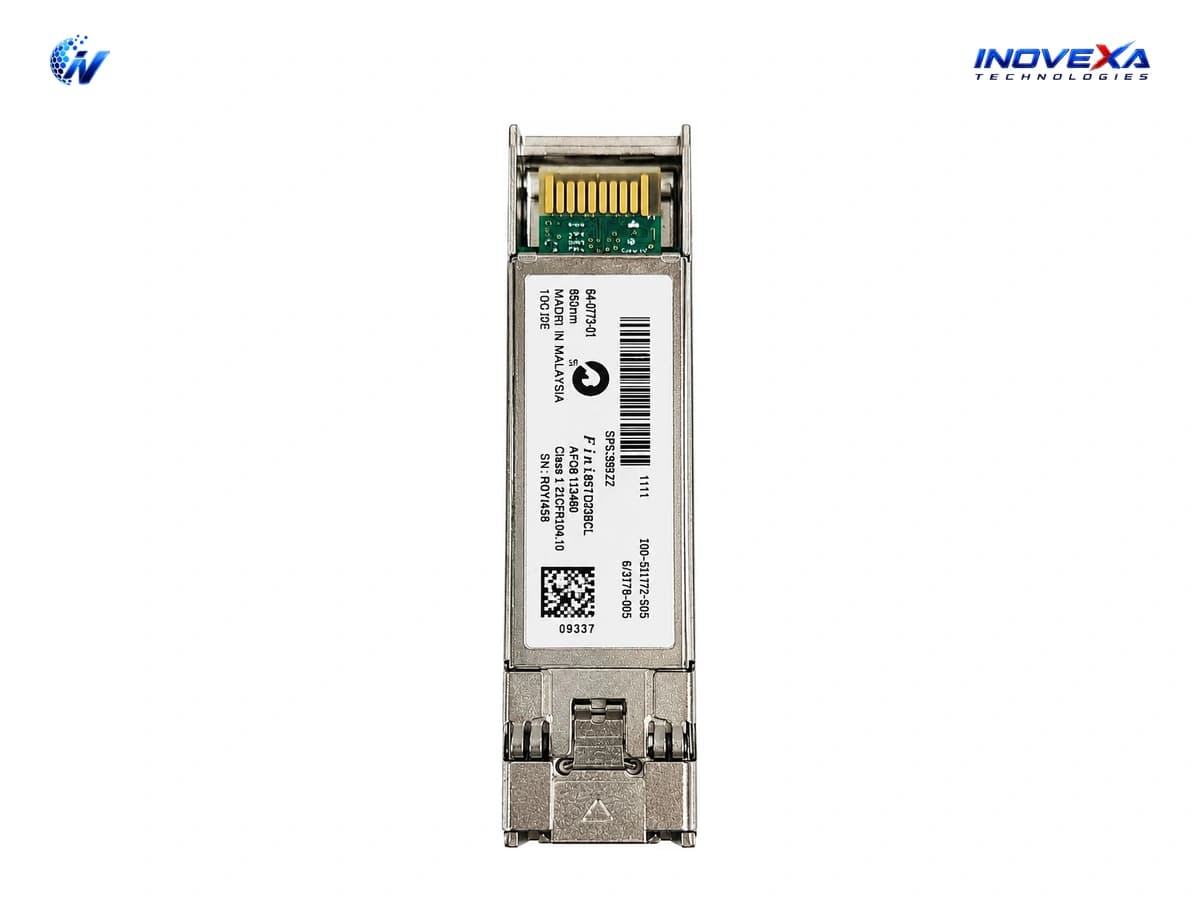
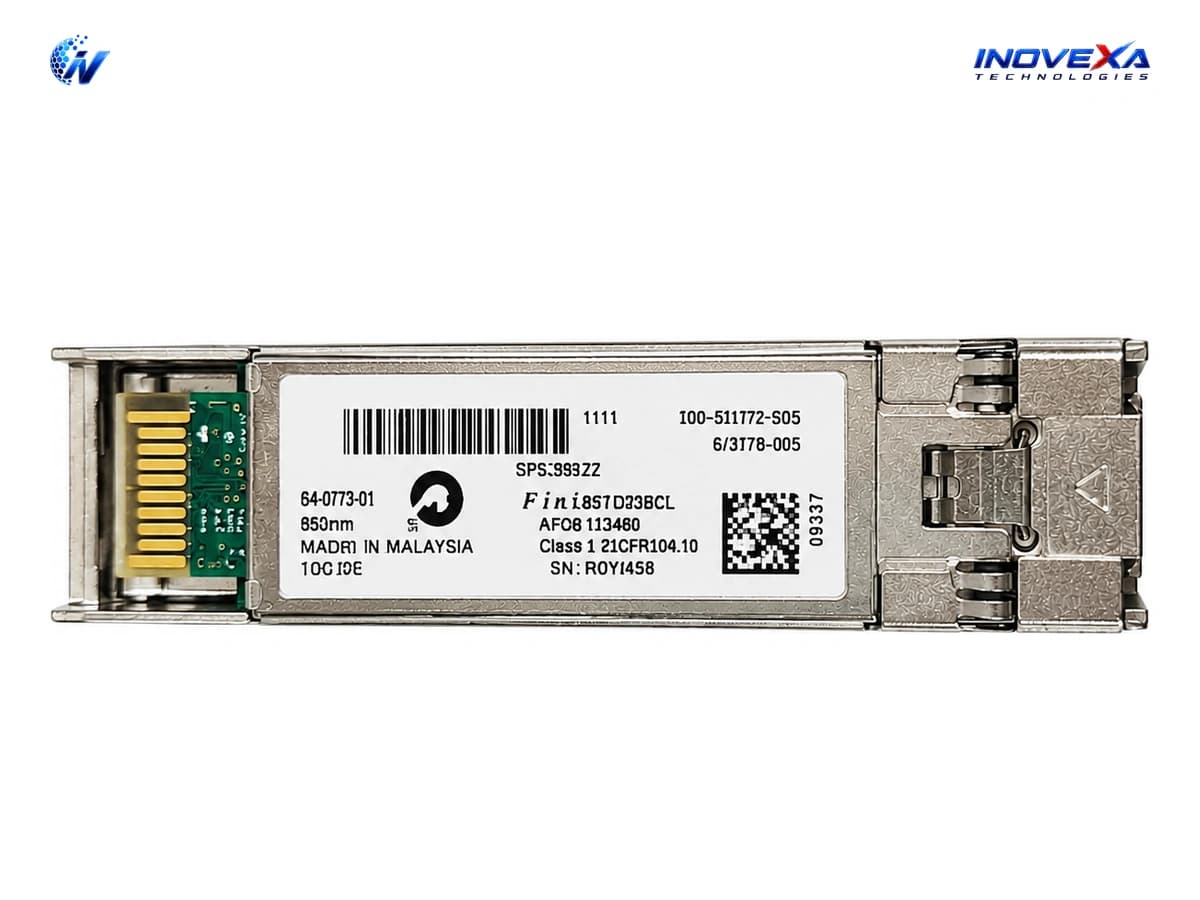
.webp&w=1920&q=75)
About Transceivers & Cabling
INOVEXA TECHNOLOGIES offers a growing range of optical transceivers, fiber optic modules, Direct Attach Copper (DAC) cables, Active Optical Cables (AOC), and fiber patch cables for enterprise networks, data centers, ISP infrastructure, server environments, and high-speed network deployments across Bangladesh.
Our selection includes networking solutions across different speeds, form factors, fiber types, wavelengths, transmission distances, connector types, and vendor compatibility requirements. Depending on the model, available options may include SFP, SFP+, SFP28, QSFP+, QSFP28, and other high-speed optical interfaces.
We provide solutions for both short-distance data center interconnects and longer-distance fiber networking, including multimode and single-mode fiber applications. DAC and AOC cables provide convenient short-range connections between compatible servers, switches, routers, and storage equipment.
Depending on the product, transceivers may support features such as DOM/DDM monitoring, vendor-specific coding, digital diagnostics, and hot-pluggable installation.
Whether you are connecting a server to a switch, expanding an ISP backbone, upgrading a data center uplink, connecting storage infrastructure, or deploying high-speed fiber links, INOVEXA TECHNOLOGIES helps you select the appropriate transceiver or cable based on interface type, speed, fiber medium, distance, wavelength, connector, and equipment compatibility.
Optical Transceiver & Fiber Interconnect Selection Guide
Selecting the right optical module or cable requires matching the network speed, interface, fiber type, transmission distance, connector, and equipment compatibility.
1. Form Factor & Network Speed
Choose a transceiver that matches the physical interface and supported network speed of your switch, router, server, or NIC. Common enterprise form factors include: SFP / SFP+ (1G and 10G), SFP28 (25G), QSFP+ (40G), and QSFP28 (100G). Actual supported speeds depend on the individual device and transceiver.
2. Fiber Type & Transmission Distance
Select the optical module according to the required transmission distance and fiber infrastructure. Multimode fiber (MMF) is commonly used for shorter data center and building links, while single-mode fiber (SMF) is generally preferred for longer-distance network connections. Always match the transceiver's wavelength, fiber type, connector, and distance rating with the installed fiber infrastructure.
3. DAC vs. AOC vs. Optical Transceivers
For short server-to-switch connections, DAC cables provide a simple and cost-effective solution with low power consumption. AOC cables combine optical transmission with integrated transceivers and can be useful for longer short-range connections where copper DAC may not be suitable. Separate optical transceivers and fiber patch cables provide greater flexibility for network deployments where different distances, fiber types, or connection paths are required.
4. Vendor Compatibility & Coding
Transceiver compatibility can depend on the switch, router, NIC, firmware, vendor coding, and optical specifications. Before purchasing, verify the required vendor compatibility and ensure that the selected module matches the equipment's supported optical specifications.
Key Enterprise Benefits
Wide Range of Connectivity Options
Choose from different transceiver form factors, speeds, fiber types, cables, and connector configurations to build flexible network infrastructure.
High-Speed Network Interconnects
Suitable optical and cable solutions support high-bandwidth connections between servers, switches, routers, storage systems, and data center infrastructure.
Short- and Long-Distance Deployment
Solutions are available for everything from short rack-level connections to longer fiber links, depending on the selected optical module and fiber infrastructure.
Digital Optical Monitoring
Selected transceivers support DOM/DDM, providing information such as optical transmit and receive power, temperature, voltage, and laser bias current where supported.
Flexible Vendor Compatibility
Products may be available with compatibility for different networking platforms, including Cisco, MikroTik, Dell, HPE, Huawei, Juniper, Intel, and other network equipment, depending on the individual product.
Cost-Effective Network Expansion
Optical modules, DACs, AOCs, and fiber cables provide practical alternatives for expanding network capacity without replacing existing switching and routing infrastructure.
Industry Applications & Deployments
Data Center Server & ToR Connectivity
Connect servers, storage systems, and network adapters to Top-of-Rack switches using compatible 10G, 25G, 40G, or 100G optical modules, DACs, and AOCs.
ISP Backbone & POP Networks
Deploy high-speed optical connectivity between routers, switches, aggregation equipment, and Point of Presence (POP) infrastructure.
Enterprise Network Uplinks
Build high-bandwidth connections between access, distribution, and core network layers using compatible fiber transceivers.
Server & Storage Infrastructure
Connect servers, storage systems, NAS/SAN infrastructure, and high-performance network adapters using appropriate optical or direct-attach connectivity.
Campus & Building Networks
Use single-mode or multimode fiber solutions for connections between network rooms, buildings, distribution switches, and core infrastructure, depending on distance and fiber availability.
High-Speed Network Upgrades
Upgrade existing infrastructure from lower-speed connections to 10G, 25G, 40G, 100G, and other supported network speeds without replacing the entire network architecture.