Explore RAID & Expansion Cards Subcategories
PCIe Expansion Cards
About RAID & Expansion Cards
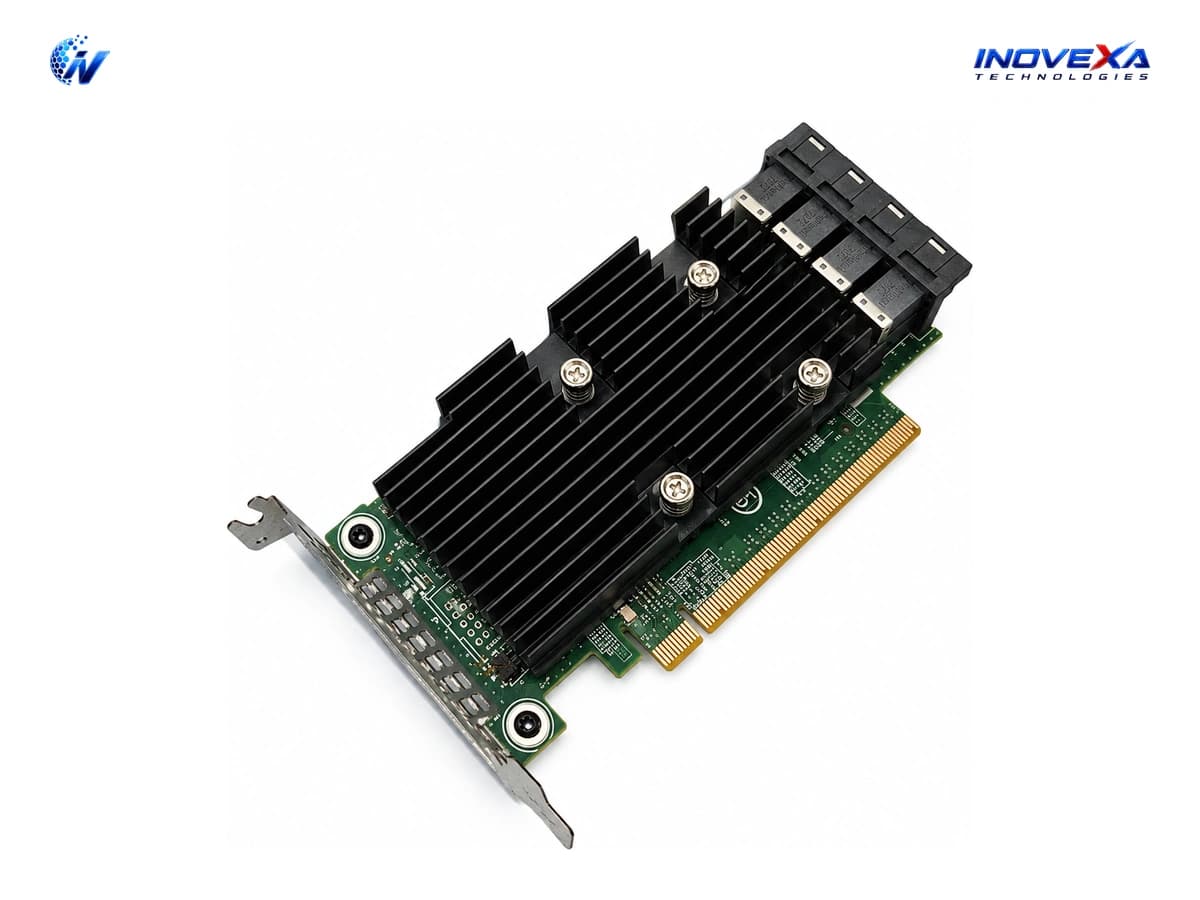
PCIe expansion cards for servers, workstations, and network appliances, providing additional connectivity and functionality such as networking, storage interfaces, USB, and other expansion capabilities.
Enterprise Storage Controller & HBA Selection Guide
Selecting the right storage controller depends on your storage architecture, RAID requirements, server compatibility, drive interface, and intended workload.
1. Hardware RAID vs. HBA / Pass-Through
Hardware RAID controllers manage supported RAID arrays directly through dedicated controller hardware, while HBAs provide direct access to individual drives. HBAs are commonly used with software-defined storage platforms such as ZFS, TrueNAS, Ceph, and other storage architectures that require direct disk visibility.
2. RAID Levels & Storage Protection
Different controllers support different RAID levels and storage configurations. Depending on the model, available options may include RAID 0, 1, 5, 6, 10, 50, 60, JBOD, or pass-through modes. Always verify supported RAID levels on the individual controller before purchase.
3. Cache & Power-Loss Protection
Some hardware RAID controllers include dedicated cache memory and protection mechanisms such as battery-backed cache or flash-backed cache with supercapacitors. These features can improve write performance and help protect cached data during unexpected power interruptions.
4. SAS, SATA & NVMe Compatibility
Select a controller based on the storage interface supported by your server and drives. Depending on the model, controllers may support SAS, SATA, NVMe, or multiple storage protocols, including some tri-mode architectures.
5. Internal & External Connectivity
Check whether you require internal connectors for server drive backplanes or external ports for JBOD and storage expansion enclosures. Common connector types vary by controller and may include Mini-SAS, Mini-SAS HD, SlimSAS, and other storage interfaces.
Key Enterprise Benefits
Flexible Storage Management
RAID controllers and HBAs provide flexible ways to connect, manage, protect, and expand server storage according to the selected controller architecture.
Hardware RAID Acceleration
Supported RAID controllers can perform parity calculations and array management using dedicated controller hardware, reducing the workload placed on the host system.
Storage Expansion
PCIe storage controllers allow compatible servers to connect to additional SAS, SATA, or NVMe drives when existing motherboard or backplane connectivity is insufficient.
Data Protection & Redundancy
Supported RAID configurations can provide different levels of data redundancy, fault tolerance, and performance, depending on the selected RAID level and controller.
Software-Defined Storage Compatibility
Compatible HBAs can provide direct drive access for storage platforms such as ZFS, TrueNAS, Ceph, and other software-defined storage environments, subject to controller mode and platform compatibility.
Enterprise Server Compatibility
Storage controllers are available for a variety of Dell PowerEdge, HPE ProLiant, Supermicro, Lenovo, custom-built servers, and other compatible platforms, depending on the specific model.
Industry Applications & Deployments
Enterprise RAID Storage
Build protected storage arrays for databases, file servers, application servers, and business-critical workloads using compatible hardware RAID controllers.
ZFS, TrueNAS & Software-Defined Storage
Use compatible HBA cards for direct drive access in ZFS, TrueNAS, Ceph, and other software-defined storage environments.
Server Storage Expansion
Add additional SAS or SATA drive connectivity to servers where the existing storage controller or motherboard interfaces are insufficient.
External JBOD Expansion
Connect compatible servers to external JBOD storage enclosures for scalable storage capacity and centralized disk management.
Virtualization Infrastructure
Deploy storage controllers and HBAs in VMware, Proxmox, Hyper-V, and other virtualization environments, depending on hardware and software compatibility.
Database & High-Performance Storage
Use appropriate RAID controllers and enterprise storage configurations for SQL databases, virtualization storage, application servers, and high-I/O workloads.
Server Upgrades & Replacement
Replace outdated or failed storage controllers or upgrade existing systems with newer controllers supporting higher drive counts, faster interfaces, or additional storage technologies.